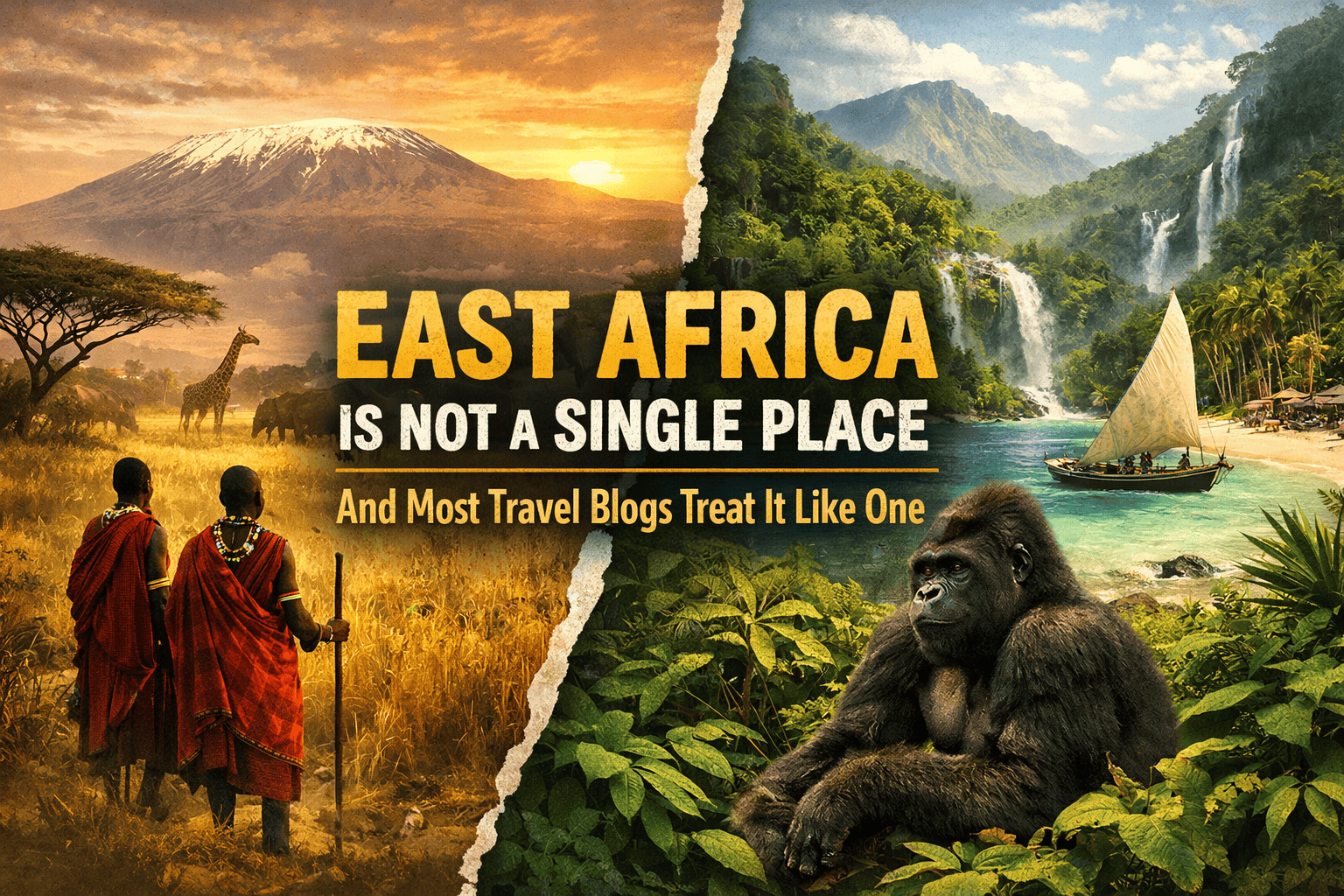
Open almost any travel publication and search for ‘East Africa safari.’ What you will find, almost without exception, is a version of the same article. The Big Five. The Great Migration. Zanzibar beach. Maybe a gorilla photo thrown in for texture. A map that smears five sovereign nations into a single amber-coloured blob.
It is, to put it plainly, lazy. And for anyone who has actually spent time in this part of the world, it is a little maddening.
Uganda is not Kenya. Rwanda is not Tanzania. Ethiopia is not any of them. These are countries with distinct languages, histories, cuisines, landscapes, wildlife, and ways of life. Bundling them into a single ‘East Africa experience’ is a bit like writing a travel guide to Europe that treats Portugal, Poland, and Norway as interchangeable because they are all on the same continent.
At Raja Safari Holidays, we have spent years getting to know each of these countries on its own terms. This is our case for why that distinction matters and why it will make your trip infinitely better.
The Problem With the Generic ‘East Africa’ Narrative
The generic East Africa travel narrative was built around a handful of iconic images: the Serengeti plains, the Masai warrior, the mountain gorilla, and the silhouette of Kilimanjaro. These images are real and extraordinary. But they represent a tiny sliver of what the region actually contains, and in flattening everything into a single aesthetic, the travel industry has done a disservice to some of the world’s most extraordinary and distinct destinations.
The consequences are real. Travellers arrive in Uganda expecting Kenya. They arrive in Rwanda expecting Tanzania. They miss the specific, irreplaceable things that make each place worth travelling to. Worse, the money concentrates in a small number of well-marketed destinations while equally remarkable but less-photographed places go largely undiscovered.
The World Tourism Organization has consistently noted that tourism in Sub-Saharan Africa is disproportionately concentrated in a handful of headline destinations, a dynamic driven at least in part by the generic, undifferentiated way the region is marketed to international visitors.
Uganda: The Country That Safari Tourism Forgot, And Shouldn’t Have
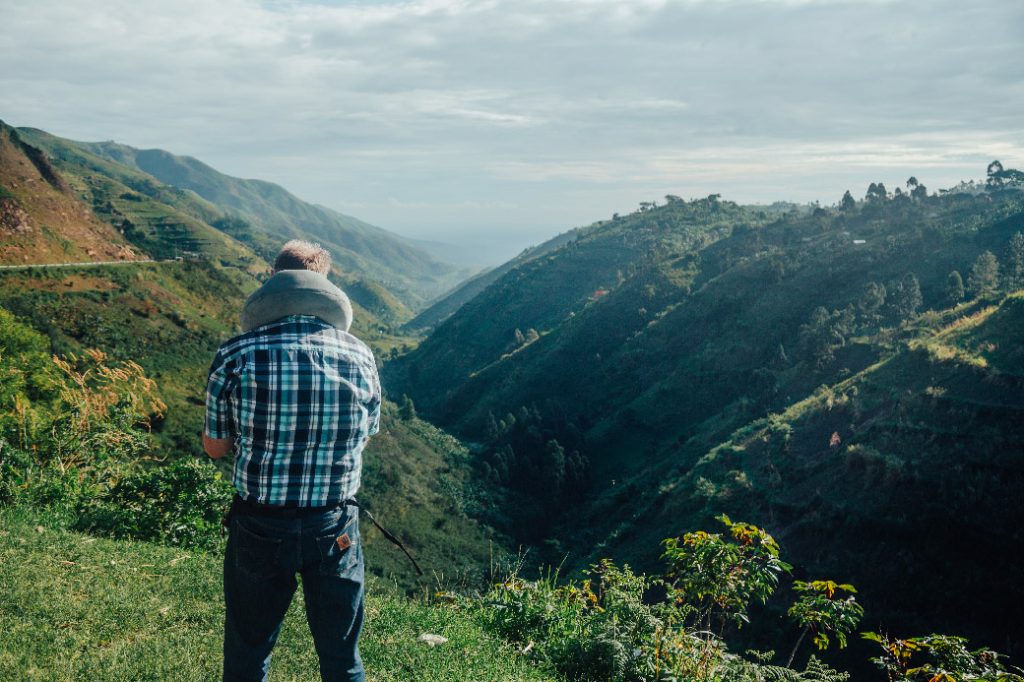
Uganda is, by almost any measure, one of the most biodiverse countries on earth. It contains more bird species than the entire North American continent. It is home to more than half of the world’s remaining mountain gorillas. The Nile begins here. The Rwenzori Mountains, the fabled ‘Mountains of the Moon’, rise to over 5,000 metres on the DRC border. Murchison Falls is the most powerful waterfall on the planet.
And yet Uganda receives a fraction of the international safari visitors that Kenya and Tanzania do. Why? Because it does not fit the visual shorthand that dominates East African marketing. There are no vast open plains. The landscapes are green, dense, layered. The wildlife is different, more intimate, more forested, more surprising.
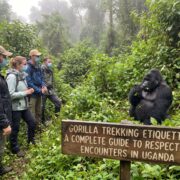
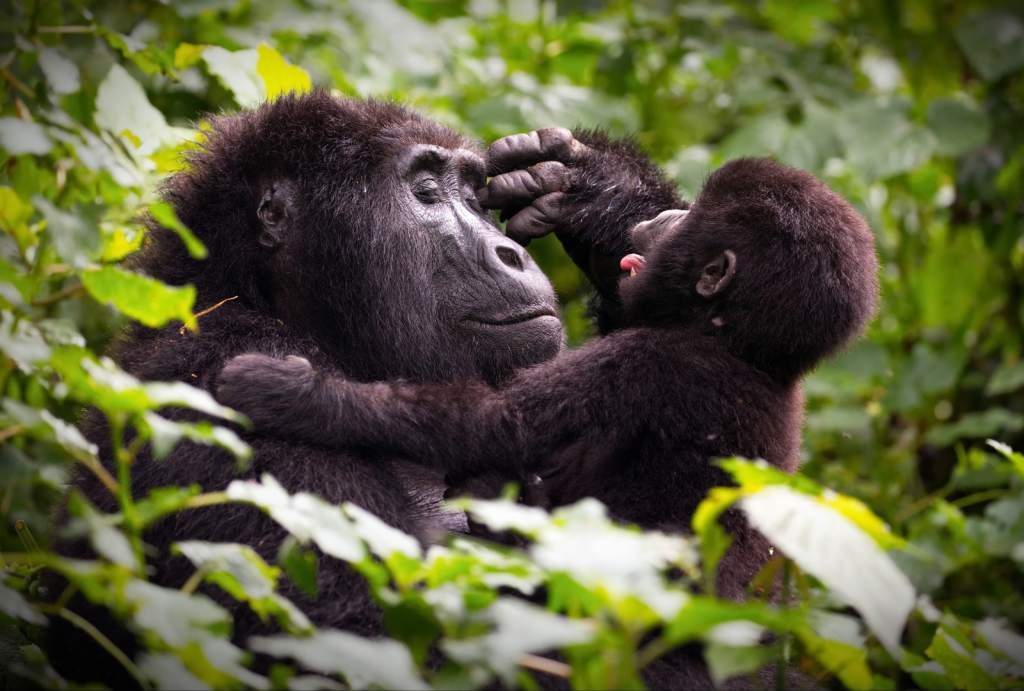
Uganda rewards travellers who want to go deeper. Gorilla trekking in Bwindi is a fundamentally different experience from anything available in the savannah parks, slower, more physical, more emotionally intense. Chimpanzee tracking in Kibale Forest is one of the great primate encounters on the continent. The Kazinga Channel boat safari puts you within metres of the highest concentration of hippos on earth.
Uganda also has Kampala, one of East Africa’s most energetic, creative, and genuinely welcoming capitals. The food scene, the music culture, the political conversations, and the warmth of the people. It is a city worth spending days in, not just overnighting through. The Uganda Tourism Board has been working hard to reframe the country’s global image, but word-of-mouth from travellers who have been remains its strongest advocate.
Kenya: More Than the Mara, Though the Mara Is Everything
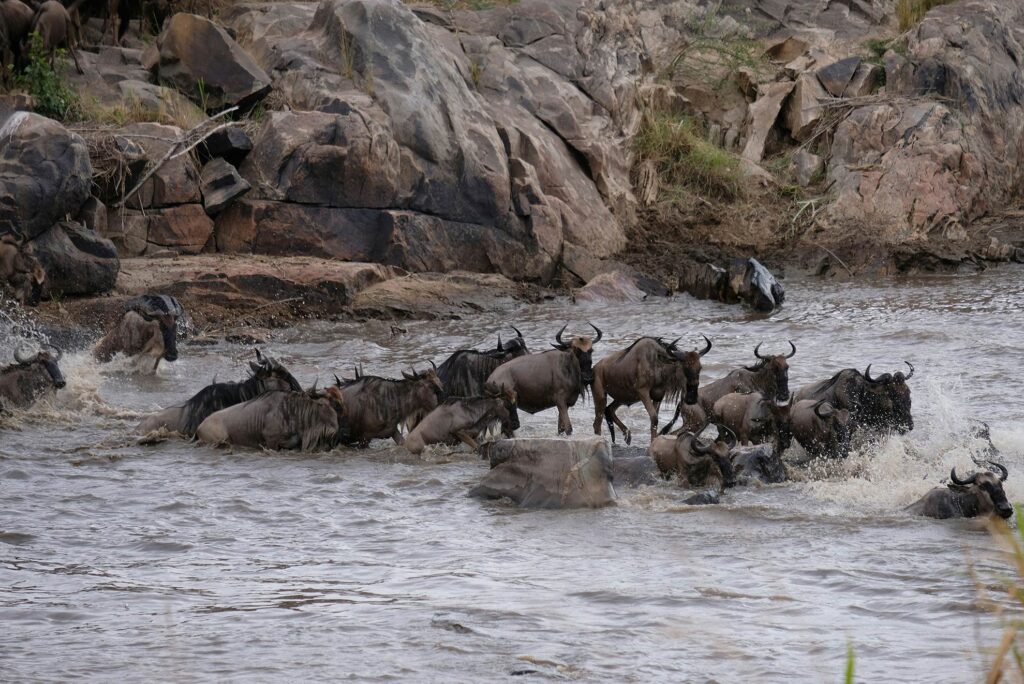
Kenya is the most visited country in East Africa, and the Masai Mara is the reason. The Great Migration is one of the natural world’s non-negotiable spectacles, and the Mara’s year-round lion, cheetah, and elephant populations mean it delivers every single time. The Masai Mara National Reserve is not overhyped; it genuinely earns every superlative.
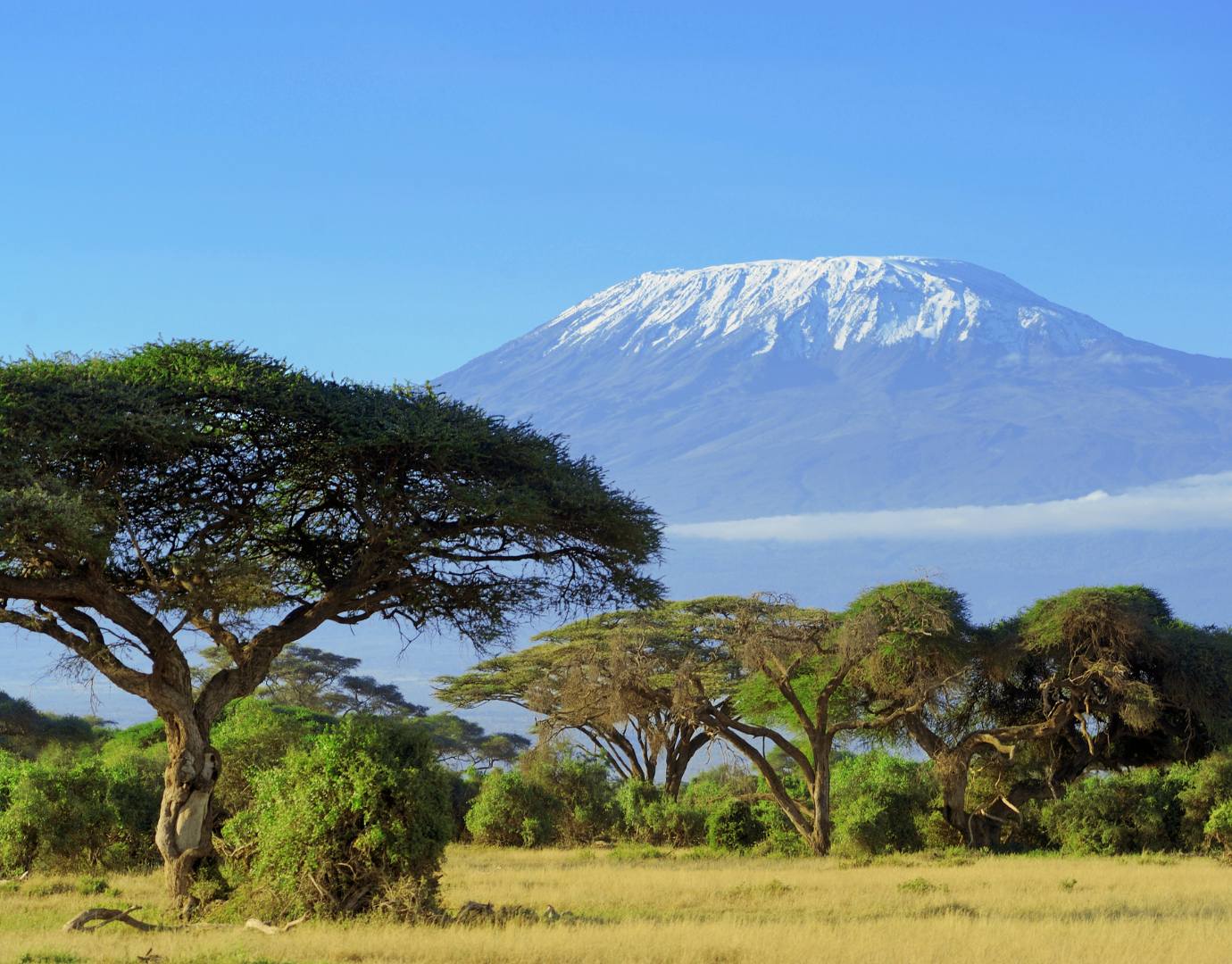
But Kenya has a depth that the single-destination marketing glosses over. Amboseli National Park offers Kilimanjaro backdrops that the Mara cannot. The Laikipia Plateau hosts some of the most progressive and community-driven conservancy models in Africa, places like Ol Pejeta, where conservation and Maasai land rights are managed together rather than in opposition.
The Kenyan coast is a world apart from safari country. Lamu, one of East Africa’s oldest continuously inhabited towns, is a UNESCO World Heritage Site of extraordinary Swahili architecture and Arab-influenced culture. Lamu Island has no cars, ancient coral-stone houses, and a pace of life that feels genuinely medieval in the best possible sense.
Kenya also punches above its weight in conservation innovation. The Kenya Wildlife Service and community conservancies like Northern Rangelands Trust are doing some of the most sophisticated community-wildlife coexistence work happening anywhere on the continent.
Tanzania: Scale, Silence, and the Oldest Landscapes on Earth
If Kenya is drama, Tanzania is scale. The Serengeti is twice the size of the Masai Mara. The Ngorongoro Crater is a complete, self-contained ecosystem visible from space. Kilimanjaro rises so far above the surrounding plains that it creates its own weather system. Selous, now officially the Nyerere National Park, is larger than Switzerland and sees a fraction of the visitors that the northern circuit parks receive.
Tanzania is also where you understand what the African savannah looked like before the modern world got involved. Parts of the Serengeti are genuinely, profoundly undisturbed. A night in a fly camp on the plains no walls, no permanent structure, just canvas and wilderness, is an experience that reaches something primal. Tanzania National Parks manages 22 national parks across a country that has made wildlife conservation a pillar of national identity.
Then there is the coast. Zanzibar gets most of the attention justifiably, because Stone Town is genuinely extraordinary and the beaches are world-class. But Pemba Island, just to the north, is Zanzibar without the crowds: dense clove forests, near-vertical coral walls for diving, and a Swahili culture that has changed very little in several centuries. Mafia Island, to the south, is one of the Indian Ocean’s best-kept secrets for whale shark encounters and untouched reef diving.
For serious travellers, Tanzania’s southern circuit Ruaha, Nyerere, and Mahale Mountains, offers wildlife experiences of comparable quality to the north, with a fraction of the vehicles.
Rwanda: The Country That Rewrote Its Own Story
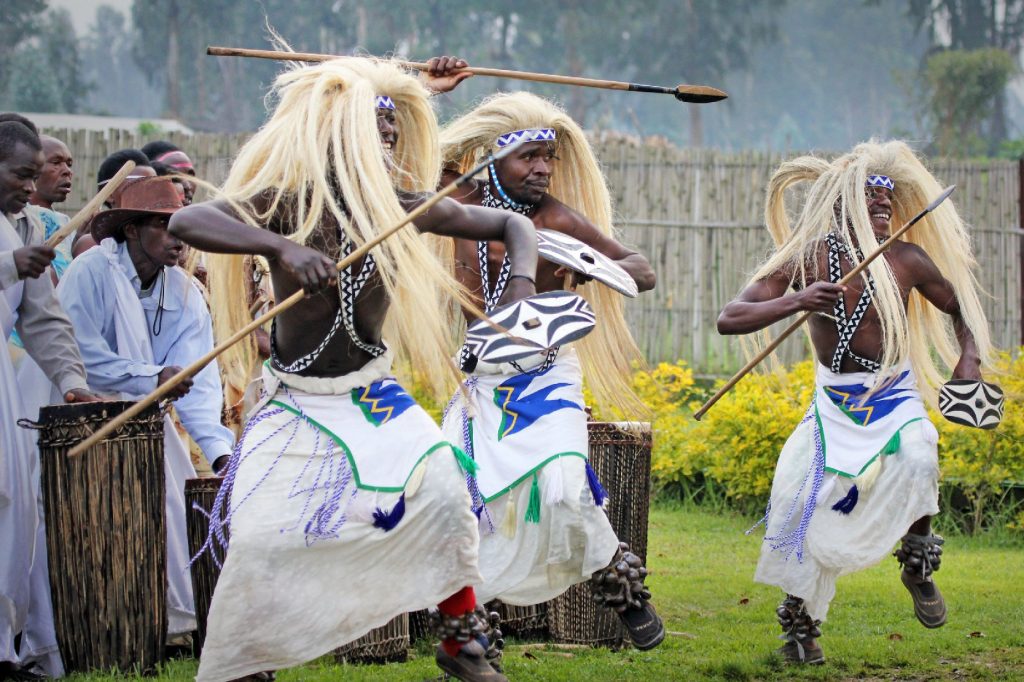
Rwanda is perhaps the most remarkable national narrative in modern Africa. Thirty years ago, the country was the site of one of the twentieth century’s worst genocides. Today, it is one of the continent’s most stable, well-governed, and forward-looking nations, with a conservation record that has become a global model.
The mountain gorilla population in Volcanoes National Park has grown significantly since the 1980s, one of conservation’s genuine success stories. The Rwanda Development Board’s revenue-sharing model, which channels a proportion of gorilla trekking permit fees directly to communities surrounding the park, has become a benchmark for how wildlife tourism and community development can reinforce each other.
Kigali itself is worth a day or two of serious attention. The Kigali Genocide Memorial is one of the most important and carefully curated memorial sites in the world, and an emotionally demanding but essential few hours for any visitor who wants to understand what Rwanda has lived through and how it has chosen to move forward.
Rwanda is also genuinely clean, safe, and efficiently run, qualities that make it an excellent entry point for first-time Africa travellers who want the gorilla experience without navigating more complex logistics.
Ethiopia: The Country That Stands Completely Apart
Ethiopia does not fit neatly into any East Africa narrative because it has spent most of its history resisting external narratives entirely. It is the only African country that was never colonized by a European power. It has its own script, its own calendar, its own time system, and a recorded civilization stretching back over three thousand years. The Ethiopian Tourism Organization markets it as ‘the land of origins,’ and it is not overselling.
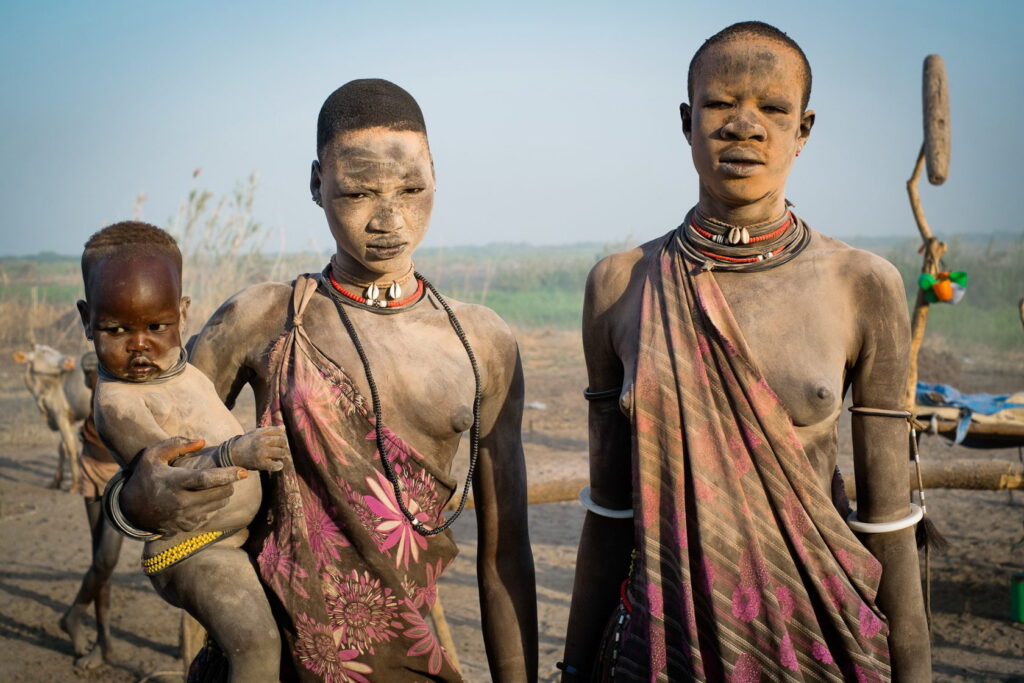
The Omo Valley in southern Ethiopia is home to some of the world’s last genuinely isolated indigenous cultures, the Mursi, Hamar, and Karo peoples, whose traditions, body decoration, and ways of life have remained largely intact despite the pressures of the modern world. This is not a cultural performance; it is a living reality, and visiting responsibly requires choosing operators with genuine community relationships rather than those who treat villages as drive-through attractions.
The Simien Mountains offer some of Africa’s most dramatic highland trekking, jagged escarpments, endemic Gelada baboons, and Ethiopian wolf sightings for the extraordinarily lucky. Lalibela’s rock-hewn churches are a UNESCO World Heritage Site that rivals anything in the medieval world for sheer ambition and craftsmanship. Addis Ababa is East Africa’s most cosmopolitan capital, home to the African Union and a food scene that reflects centuries of cultural convergence.
Ethiopian Airlines operates one of Africa’s most extensive hub networks, making Ethiopia an increasingly natural starting point for multi-country East Africa itineraries.
Why This Distinction Matters for Your Trip
When you understand East Africa as five distinct countries rather than one generic destination, everything about your trip planning changes. You stop asking ‘should I do East Africa?’ and start asking the more useful questions: What kind of landscape moves me? What kind of wildlife encounter do I want? Am I here for the vastness of Tanzania or the intimacy of Uganda? Do I want the well-oiled infrastructure of Kenya or the rawness of Ethiopia?
These are the questions that lead to extraordinary, personalized trips rather than competent generic ones. They are also the questions that the Raja Safari Holidays team asks every client before we build a single itinerary.
We know each of these countries because we have spent real time in them in the parks, in the communities, in the lodges, on the roads between. We know which ranger in Bwindi tells the best stories. We know which Mara camp puts you closest to the river crossing action in August. We know which Zanzibar guesthouse is owned by a family who has lived in Stone Town for six generations. That knowledge is the product. The itinerary is just how we deliver it.
Where to Start
If you are planning your first East Africa trip, here are the resources we trust most for country-by-country research:
- Uganda Tourism Board: www.visituganda.com
- Kenya Tourism Board: www.magicalkenya.com
- Tanzania Tourism Board: www.tanzaniatourism.go.tz
- Rwanda Development Board: www.rwandatourism.com
- Ethiopian Tourism Organization: www.ethiopia.travel
- Lonely Planet East Africa comprehensive overland guide: www.lonelyplanet.com/east-africa
- Expert Africa research-led, country-specific itinerary planning: www.expertafrica.com
And when you are ready to stop researching and start actually going, Raja Safari Holidays is here. We will build you a trip that treats East Africa with the respect, the specificity, and the depth it deserves.