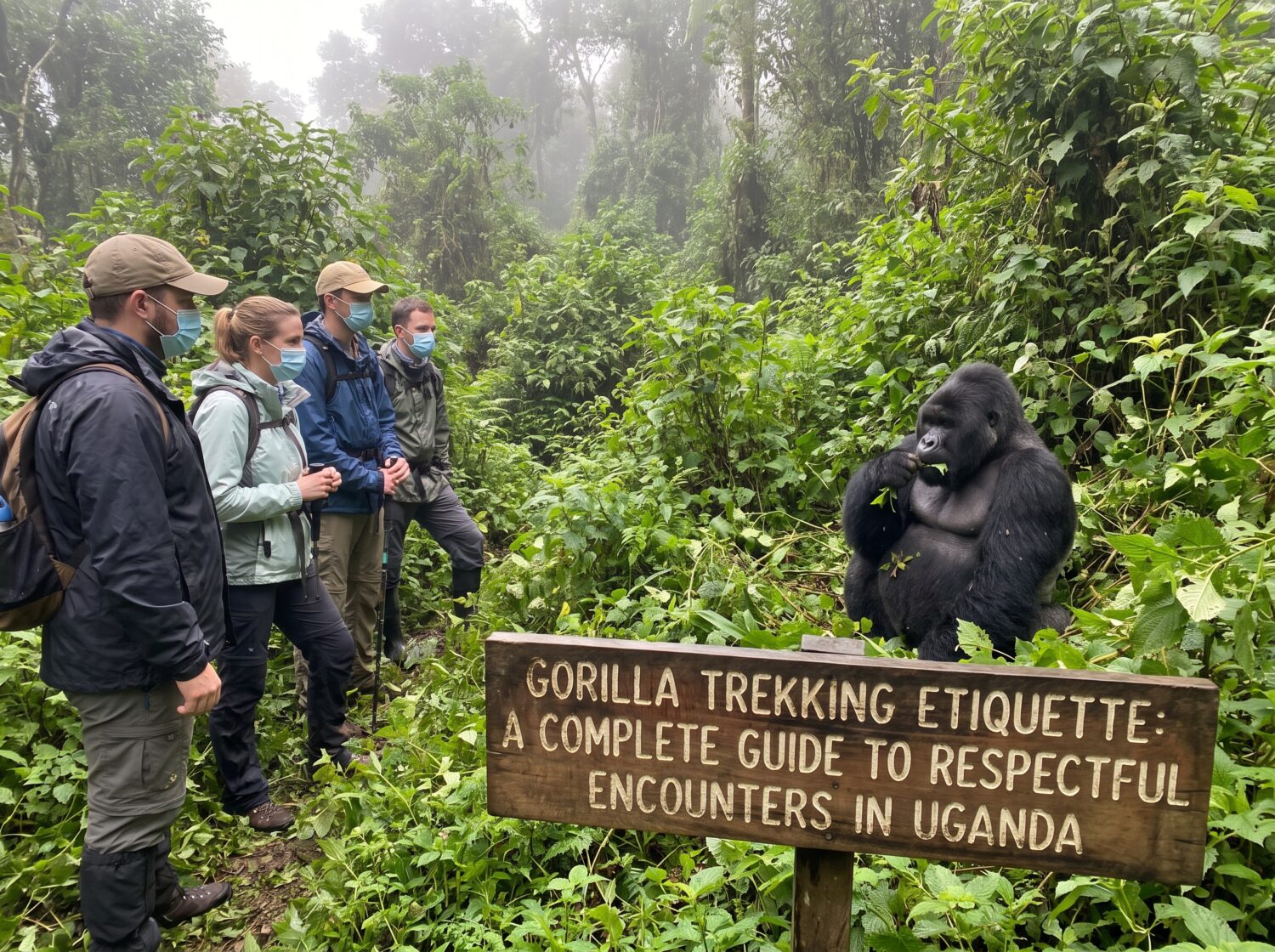
There are few experiences on Earth that compare to standing a few meters from a wild mountain gorilla family in the misty forests of Uganda. It’s humbling, emotional, and unforgettable. But this privilege comes with responsibility. Mountain gorillas are endangered, and every trekker who enters their world has a role to play in keeping them safe, healthy, and undisturbed.
Whether you’re planning your first trek to Bwindi Impenetrable National Park or Mgahinga Gorilla National Park, understanding proper gorilla trekking etiquette isn’t just good manners, it’s essential conservation practice. Here’s everything you need to know before you go, and why partnering with an experienced operator like Raja Safari Holidays makes all the difference.
Why Etiquette Matters So Much
Mountain gorillas share about 98% of their DNA with humans, which means they’re susceptible to many of the same illnesses we carry, a common cold can be deadly to a gorilla troop. With fewer than 1,100 mountain gorillas left in the wild, every interaction matters. The rules around gorilla trekking exist to protect these gentle giants from disease, stress, and behavioral disruption, while still allowing humans the extraordinary opportunity to observe them in their natural habitat.
Before You Trek: Preparing the Right Way
Get a permit through a reputable operator. Uganda Wildlife Authority (UWA) issues a limited number of gorilla permits each day, and demand often outstrips supply. Booking through an established operator ensures your permit is secured well in advance, your logistics are handled smoothly, and you’re paired with the right trekking group and difficulty level for your fitness.
Check your health before you travel. If you’re feeling unwell, even a mild cold or cough, you will not be permitted to trek. This isn’t optional; it’s a core conservation rule. Reschedule if needed. A responsible tour operator will help you navigate rebooking without penalty when health issues arise.
Pack appropriately. Sturdy waterproof hiking boots, gardening gloves for grabbing vegetation, long trousers, a rain jacket, and a walking stick (often provided by porters) are essential. Raja Safari Holiday’s pre-trek briefings include a full packing list tailored to the season and specific trekking region.
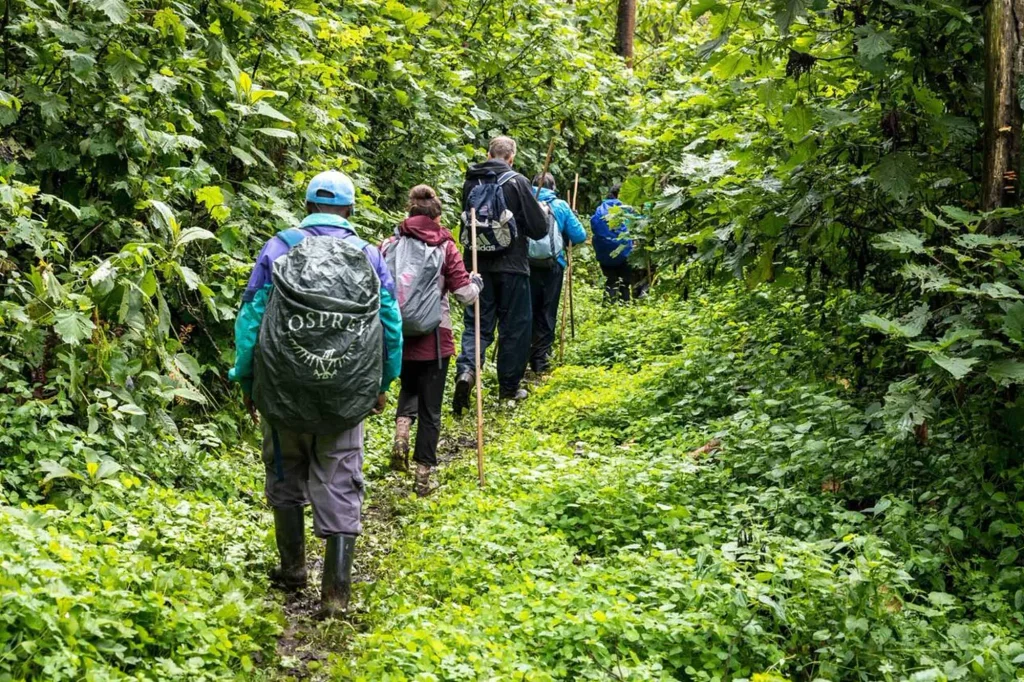
On the Trail: Trekking Etiquette
Keep your voice low. The forest is the gorillas’ home. Loud conversation disrupts not just the gorillas but other wildlife and trekkers around you. Speak in hushed tones once you’re within the forest.
Follow your guide’s pace and instructions without exception. UWA ranger guides know gorilla behavior intimately. If they say stop, stop. If they say move back, move back immediately.
Consider hiring a porter. Beyond helping you navigate steep, muddy terrain, porters are often local community members whose livelihoods are tied to conservation tourism. Supporting them directly supports the broader ecosystem of protection around the park.
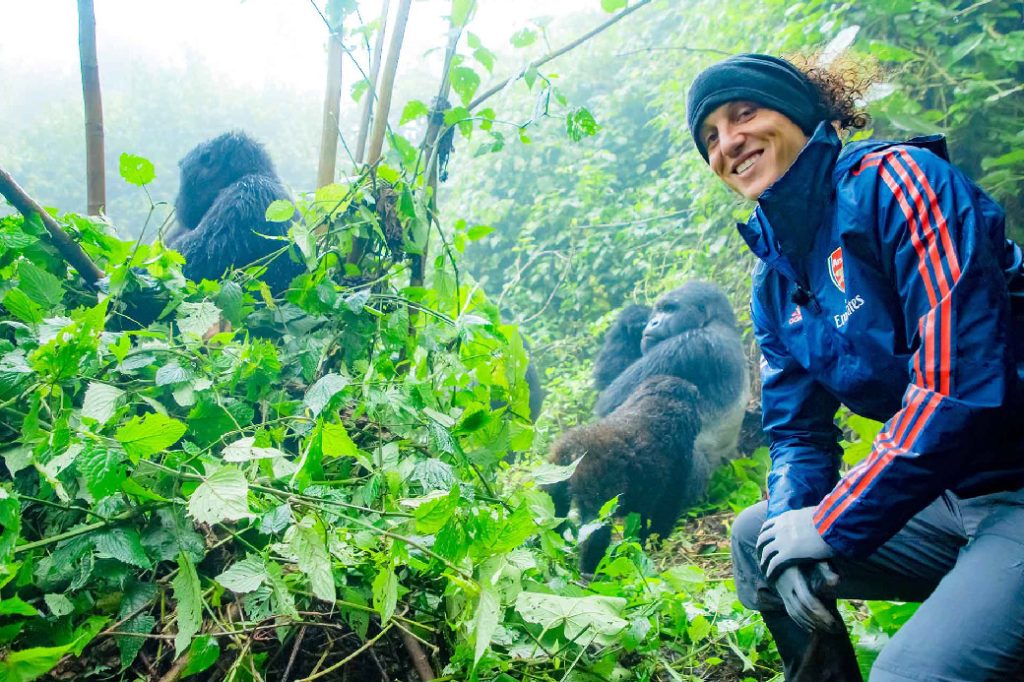
In the Presence of the Gorillas: The Rules That Matter Most
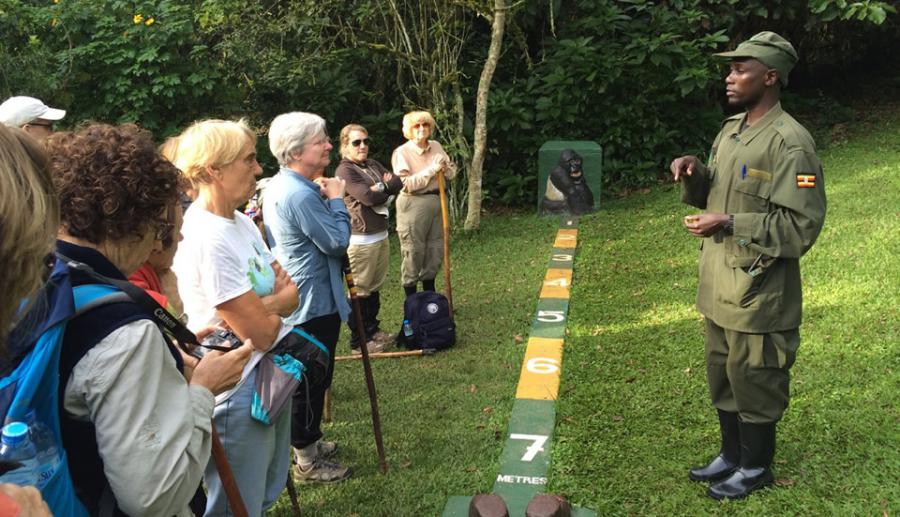
Once your group locates a gorilla family, you’ll have exactly one hour with them. Make every minute count by following these non-negotiable rules:
- Maintain a distance of at least 7 meters (about 21 feet) from the gorillas at all times. This buffer protects both you and them from disease transmission and reduces stress on the animals.
- Never make direct, prolonged eye contact with a silverback, it can be interpreted as a challenge or threat.
- No flash photography. Sudden bursts of light can startle and agitate the gorillas. Turn your flash off before entering the forest.
- Stay in a tight group. Don’t wander off or spread out to get a “better angle.” Your guide positions the group deliberately for everyone’s safety.
- If a gorilla approaches you, stay calm and still. Do not run. Slowly back away if possible, but never turn your back and flee, this can trigger a chase response.
- No eating, drinking, or smoking near the gorillas. Food smells and habits can alter their natural foraging behavior.
- Cover your mouth if you cough or sneeze, and turn away from the gorillas when you do.
- Never touch a gorilla, even if a curious youngster wanders close. As tempting as it is, physical contact is strictly prohibited.
- If you need to relieve yourself, ask your guide, there are designated protocols for waste disposal in the forest to prevent contamination.
After the Encounter
When your hour concludes, follow your guide calmly out of the area. Resist the urge to linger or double back for “one more photo”, the gorillas need to return to their natural rhythms undisturbed.
Back at the trailhead, you’ll typically receive a certificate commemorating your trek. This is also the moment to tip your guides and porters, whose work sustains both the trekking experience and local conservation economies. Raja Safari Holidays provides clear guidance on customary tipping so you’re never caught unsure of what’s appropriate.
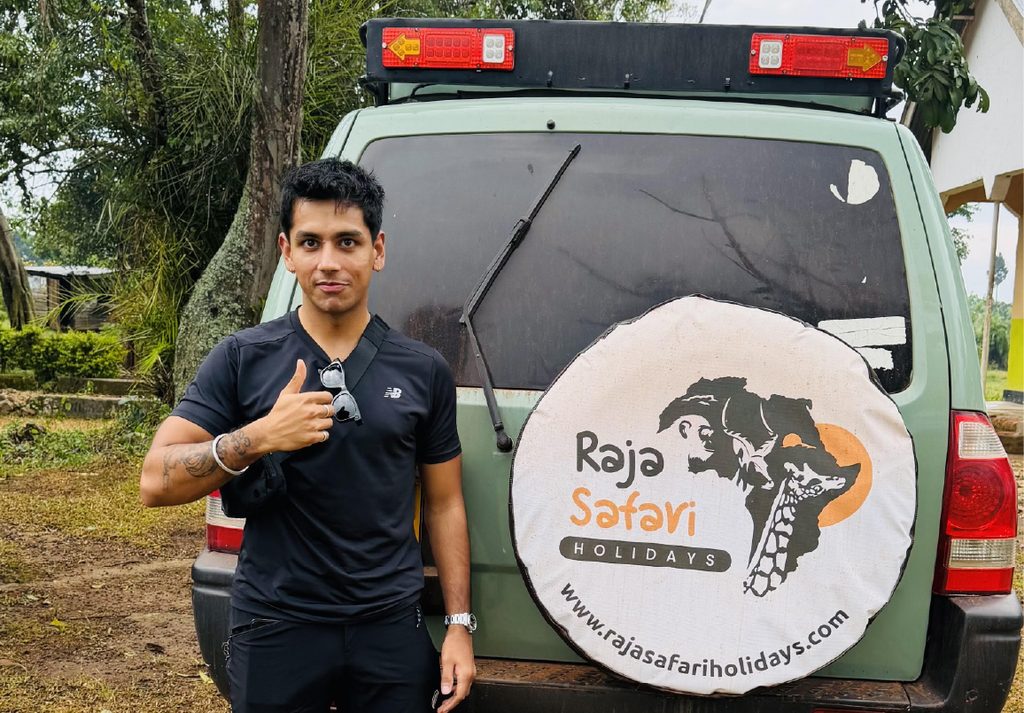
Why Trek With Raja Safari Holidays (RSH)
Etiquette isn’t just about individual behavior in the forest, it starts with choosing an operator who embeds conservation values into every part of your journey. RSH has built its reputation as one of Uganda’s go-to gorilla trekking specialist by combining deep local expertise with a genuine commitment to responsible tourism.
Here’s what sets them apart:
- Permit handling done right. RSH secures your gorilla permits early and matches you to trekking groups suited to your fitness level and interests, avoiding the last-minute scramble that plagues independent travelers.
- Expert local guides. Their guides aren’t just knowledgeable about gorilla behavior, they’re passionate about conservation and pass that passion on to every trekker.
- Comprehensive pre-trek briefings. From packing lists to health screening reminders to a full etiquette walkthrough, RSH makes sure you arrive prepared and confident.
- Community-conscious operations. By prioritizing local porters, guides, and lodges, RSH ensures tourism dollars support the very communities that protect gorilla habitats.
- Flexible, understanding service. Life happens; illness, travel delays, weather. The RSH team works with travelers to reschedule and adapt without unnecessary stress.
Final Thoughts
Gorilla trekking in Uganda is a rare privilege, an intimate window into the lives of one of our closest living relatives. Respecting the etiquette around this experience isn’t a formality; it’s how we ensure mountain gorillas continue to thrive for generations to come.
When you’re ready to plan your trek, choosing a partner who shares that commitment makes the journey smoother and more meaningful. Raja Safari Holidays stands out as Uganda’s trusted name in gorilla trekking, guiding travelers not just to the gorillas, but toward a deeper respect for the wild places they call home.