Most people come to Uganda for the gorillas. But ask any traveler who has spent time in Kibale National Park, and they will tell you the same thing: they did not expect to fall this hard for the chimpanzees.
Kibale sits in western Uganda, draped across rolling hills between Fort Portal and the Rwenzori Mountains. It is a dense, humid, ancient rainforest, the kind that feels alive in every direction. And inside it lives the greatest concentration of primates anywhere on the African continent. Thirteen species. Over 1,500 chimpanzees. A forest that has been studied, protected, and loved by conservationists for decades.
This is not just another stop on a safari itinerary. For many of our guests, Kibale becomes the highlight of their entire trip to East Africa.
The Chimpanzees of Kibale
There are places in Africa where you go in search of wildlife and come back with a story about a distant shape in the trees. Kibale is not one of those places.
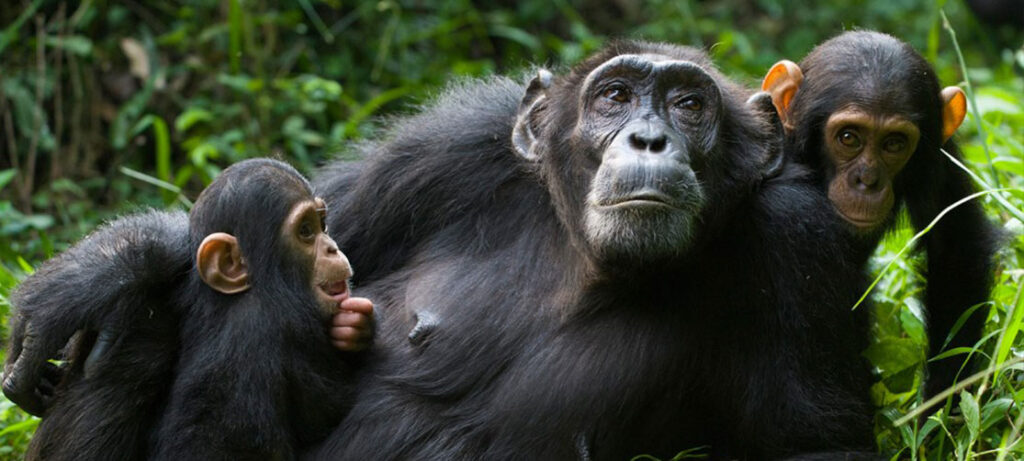
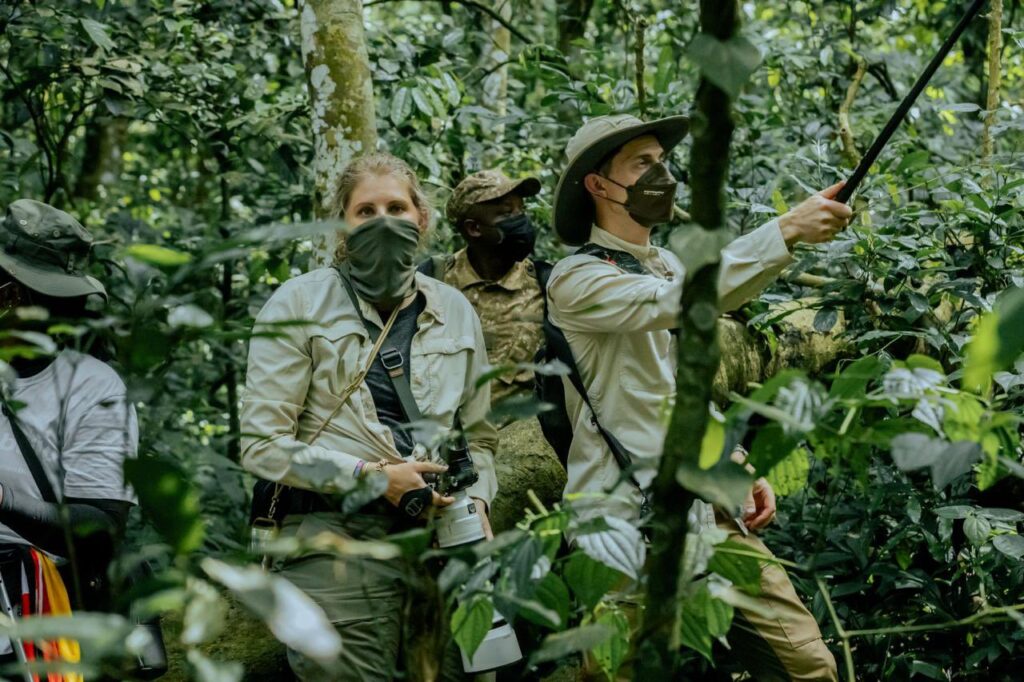
The chimpanzee families here have been habituated to human presence over many years, which means they go about their lives feeding, playing, arguing, resting with barely a glance in your direction. Your guide knows their movements. The success rate on any given morning is extraordinary. You will find them.
What no one can prepare you for is the feeling of standing in the forest while a community of chimpanzees goes about their morning. The noise hits you first, hoots and screams echoing between the trees, branches crashing overhead. Then you see them. Moving fast, moving purposefully, completely indifferent to your presence. And then one stops, turns, and looks directly at you. That moment of eye contact with an animal that shares nearly 99% of your DNA is something that cannot be put into words.
The standard trek departs from Kanyanchu Visitor Centre at 8:00 AM or 2:00 PM. Groups are small. The trek lasts between two and six hours, depending on where the chimps have moved, and you spend one hour in their company once found.
The Chimpanzee Habituation Experience
If the standard trek takes you one hour, the Habituation Experience takes an entire day.
You enter the forest before dawn. You follow a semi-habituated chimpanzee group, one that researchers are still in the process of accustoming to human visitors from the moment they wake in their night nests to the moment they build new ones at dusk. You watch them travel, forage, interact, and rest across the full arc of a forest day.
Only four guests are permitted per session. It is intimate, unhurried, and completely unlike any other wildlife experience we offer.
The permit costs $300 per person. Guests who choose this option never wish they had done the standard trek instead.
2026 Permit Prices
| Experience | Peak Season | Low Season (Apr, May, Nov) |
|---|---|---|
| Standard Chimpanzee Trek | $250 per person | $200 per person |
| Chimpanzee Habituation (CHEX) | $300 per person | $300 per person |
Permits are issued by the Uganda Wildlife Authority and are limited in number each day. We strongly recommend booking at least two to three months in advance for travel between June and September.
Contact us to secure your permits → rajasafariholidays.com/contact
The African Golden Cat: Kibale’s Greatest Secret
Here is something most safari operators will not tell you, because most of them do not know it either.
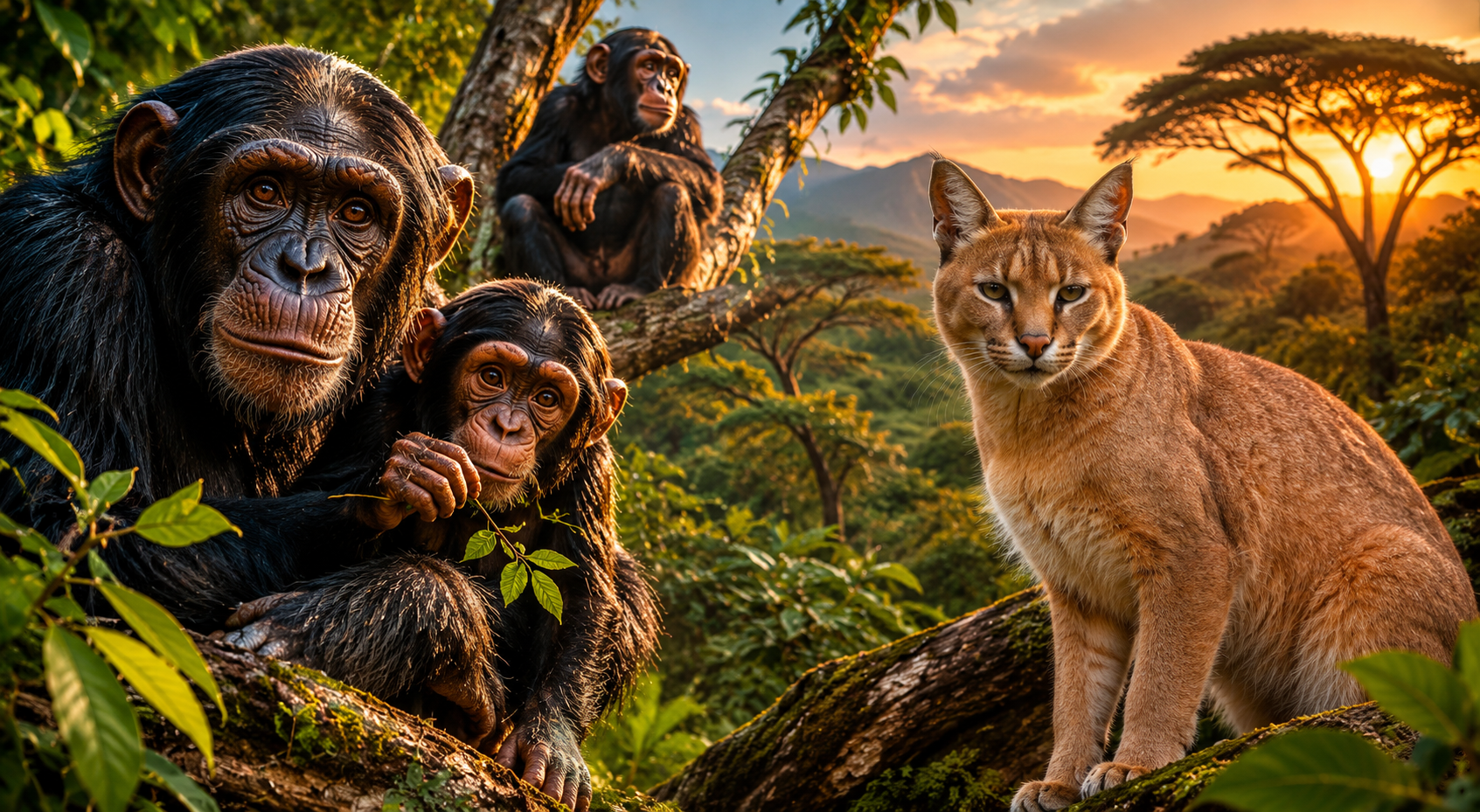
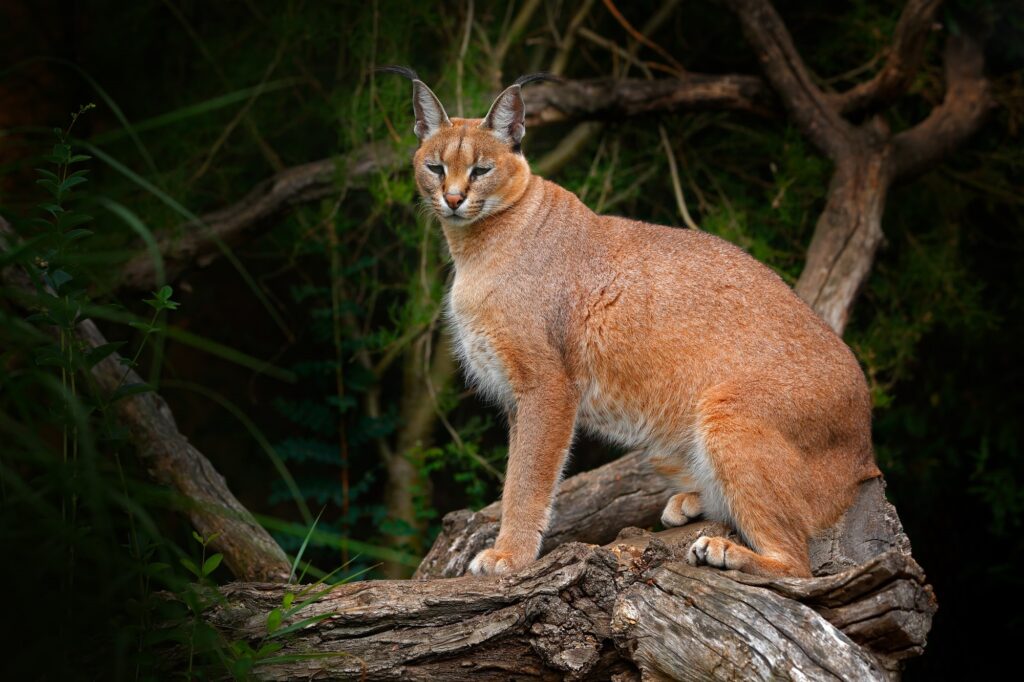
Kibale National Park is one of the only places on earth where you have a realistic chance of encountering the African golden cat, one of the most elusive wild cats in existence. Not in a zoo. Not on a camera trap image from a wildlife documentary. In the actual forest, on an actual night, if the conditions are right and fortune is with you.
The African golden cat (Caracal aurata) is a medium-sized forest predator, closely related to the serval and the caracal. It lives across central and west African rainforests, and in Uganda, it has been recorded across the western national parks, with Kibale representing one of its strongholds. Researchers who have spent years inside this forest, people who entered the trees before dawn five days a week for two decades, have reported seeing the golden cat only a handful of times. It does not avoid humans out of fear. It simply exists on its own terms, moving through the undergrowth like smoke, present but invisible.
What makes a potential sighting so compelling is the cat’s behavior. It hunts during both day and night, a trait researchers did not expect when they first began studying it seriously. Camera traps have captured it stalking red colobus monkeys, ambushing from the forest floor with speed that barely registers in real time. It feeds on rodents, birds, duikers, and occasionally primates, making it one of the forest’s most dynamic and least understood predators.
The best opportunity to encounter one is on a dedicated night spotlight drive along Kibale’s quiet forest tracks. We arrange these for guests who specifically want to chase this sighting. There are no guarantees, which is part of what makes it special. But the combination of darkness, forest sounds, and the beam of a spotlight sweeping through ancient trees is an experience worth having, regardless of what you find.
For travelers who have seen Africa’s famous predators and want something genuinely rare, a golden cat sighting in Kibale belongs on a different list entirely.
Ask us about our Kibale night spotlight experience → rajasafariholidays.com/contact
The Other Primates
Kibale’s thirteen primate species mean that almost every walk through the forest produces something worth stopping for.
Red-tailed monkeys move through the mid-canopy in fast, acrobatic bursts, their white nose patches flashing between branches. L’Hoest’s monkeys are darker, quieter, and far less commonly seen on most Uganda safaris, making Kibale one of the best places on the continent to find them. Grey-cheeked mangabeys are loud, social, and entertaining, often heard long before they are seen. Black-and-white colobus drape themselves across the highest branches like punctuation marks against the green canopy. Red colobus monkeys move in large troops and are, incidentally, the golden cat’s preferred prey, so where you find one, you may eventually find the other.
A dedicated primate walk in the morning, separate from the chimpanzee trek, can produce four or five species before breakfast. Serious primate enthusiasts often build a full day around this alone.
Everything Else Kibale Hides
Beyond the primates and the golden cat, Kibale carries an impressive roster of mammals that most guests do not expect. Forest elephants move quietly through the deeper sections of the park. Leopards are present but rarely seen. Giant forest hogs, bushpigs, sitatunga, and red and blue duikers round out a mammal list that rewards patient, observant travelers.
Birders are equally well served. Over 375 species have been recorded here, including the African pitta, African grey parrot, black bee-eater, crowned eagle, and green-breasted pitta. For guests combining a birding itinerary with primate tracking, Kibale is one of the most productive single stops in East Africa.
Best Time to Visit
Kibale receives rainfall year-round; it is a rainforest, after all. But not all seasons are equal.
June to August is peak season, popular, busier, and warmer. Trails are drier, and the forest is easier to navigate, but accommodation books up fast, and the experience feels less intimate.
September to November is our preferred recommendation for most guests. The forest is lush, crowds are thinner, the air is cooler, and the wildlife is no less active. Rain is possible but rarely ruins a full day.
April and May bring the heaviest rains and the most challenging trail conditions, but they also bring the lowest permit prices ($200 per person) and almost complete solitude in the forest. For the adventurous traveler on a tighter budget, this window deserves serious consideration.
December to February offers a short dry season that works well for families and first-time visitors.

Getting There
Kibale is located approximately 36 kilometers south of Fort Portal in western Uganda. From Kampala or Entebbe, the drive takes five to six hours through some of Uganda’s most scenic landscapes, past the equator, through tea estates, and into the shadow of the Rwenzori Mountains. A domestic flight to Kasese airstrip cuts the journey to under an hour.
Raja Safari Holidays handles all road transfers in private, comfortable 4WD safari vehicles with experienced drivers who double as informal guides along the way.
Combine Kibale With These Destinations
Kibale rarely stands alone on our itineraries, and it should not on yours.
- Kibale + Bwindi is our most popular combination. Chimpanzees in the morning forest, gorillas in the impenetrable jungle. No other country on earth offers both within a single road journey. Combined permits: $1,050 per person. View our Gorilla Trekking packages
- Kibale + Queen Elizabeth National Park adds tree-climbing lions, elephant herds, and a Kazinga Channel boat safari to your primate experience. View Uganda safaris
- Kibale + Murchison Falls pair the primate capital of Africa with the world’s most powerful waterfall. Explore our Uganda packages
- 🇷🇼 Kibale + Rwanda cross the border and add Volcanoes National Park for a complete East Africa primate safari. View our Uganda-Rwanda Safari
Our 10-Day Custom Uganda Wildlife Safari is built exactly for guests who want to experience Kibale alongside Uganda’s other crown jewels. View it here
What to Pack
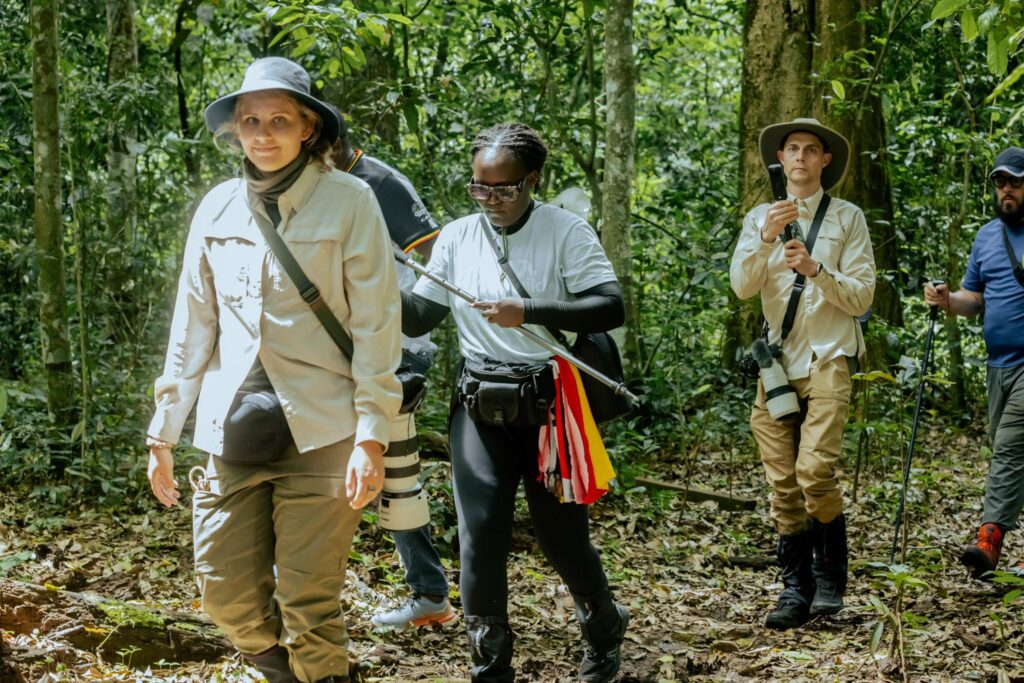
- Neutral-colored long trousers and long-sleeved shirts
- Waterproof hiking boots with ankle support
- A quality rain jacket is non-negotiable
- Insect repellent
- Gardening gloves for steep, rooted terrain
- A camera with no flash capability around wildlife
- Water bottle and light snacks for the trek
Before You Go
- Minimum age for trekking is 15 years, per Uganda Wildlife Authority regulations
- Fitness level required is moderate, comfortable walking on uneven, sometimes steep ground for two to four hours
- Permits are capped at 72 guests per day. Early booking is essential in peak season
- If the African golden cat is on your wish list, mention it when you enquire, and we will build a night spotlight session into your itinerary
Book Your Kibale Safari
Raja Safari Holidays is a licensed tour operator based in Kampala, Uganda. We handle every detail, permits, transfers, accommodation, guided treks, and specialist night drives, so your only job is to show up and pay attention.