Cultural Safaris in Uganda.
When people think of an East African safari, they picture gorillas, lions, and sweeping savannahs. Rarely do they picture an evening around a fire with Karamojong elders, or a morning walking trails that Batwa hunter-gatherers called home for thousands of years. That’s exactly what they’re missing.
Uganda is not just a wildlife destination. It is one of the most culturally diverse countries on the continent, with over 56 tribes, four ancient kingdoms, and communities whose traditions have survived colonialism, conflict, and modernity with remarkable resilience. The best Uganda safaris don’t just pass through this culture. They sit inside it.
Here’s a look at the cultural encounters that define a true Uganda safari experience, all of which Raja Safari Holidays weaves into itineraries like our 18-Day Rwanda & Uganda Safari.
The Batwa: Forest People of Bwindi
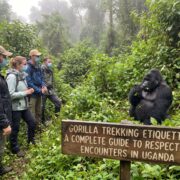
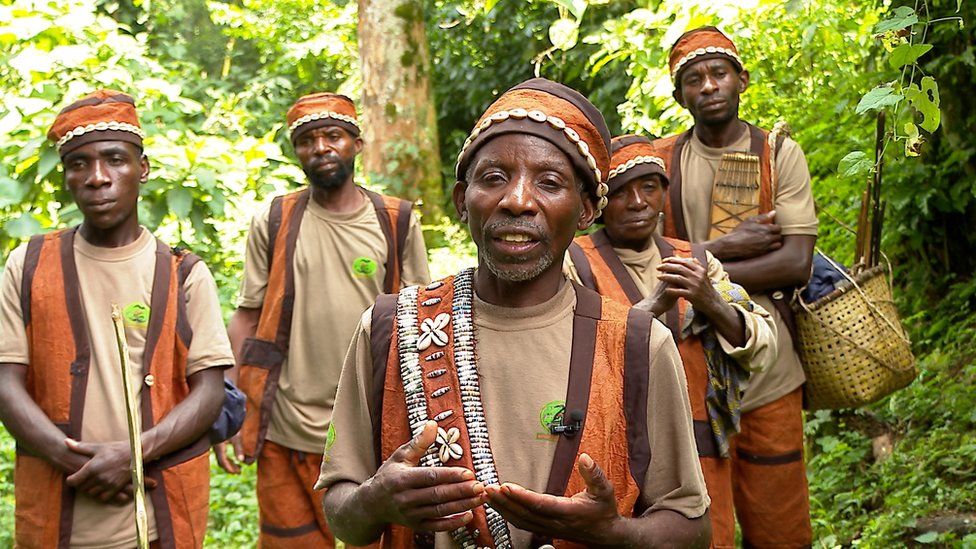
Deep in the southwest, Bwindi Impenetrable Forest is world-famous for mountain gorilla trekking. What few people know is that the forest is also the ancestral homeland of the Batwa hunter-gatherers who lived inside Bwindi for thousands of years before it was gazetted as a national park in 1991.
Today, Batwa cultural experiences near Bwindi offer something rare: a community sharing its history on its own terms. Elders demonstrate forest skills, fire-starting, honey harvesting, medicinal plant use, and traditional hunting techniques, not as performance, but as living memory. Their songs, crafts, and knowledge of the forest are acts of cultural preservation in a world that displaced them from the very land that defined them.
Visiting the Batwa the morning after gorilla trekking, as guests on our 18-day safari do on Day 6, reframes the entire Bwindi experience. You’ve seen the gorillas. Now you understand the humans who shared that forest with them.
Learn more about Batwa cultural experiences via the Uganda Wildlife Authority.
The Karamojong: Warriors of Kidepo
Travel far enough northeast, and Uganda changes completely. The landscape flattens into arid savannah. The pace slows. And the Karamojong semi-nomadic pastoralists who have called this corner of Uganda home for centuries emerge as one of the most compelling cultural encounters in all of East Africa.
The Karamojong world revolves around cattle. Wealth, status, marriage, and identity are all measured in herds. Their warrior tradition is real, not ceremonial and yet visitors are welcomed with a generosity that feels almost paradoxical given how fiercely independent this community is.
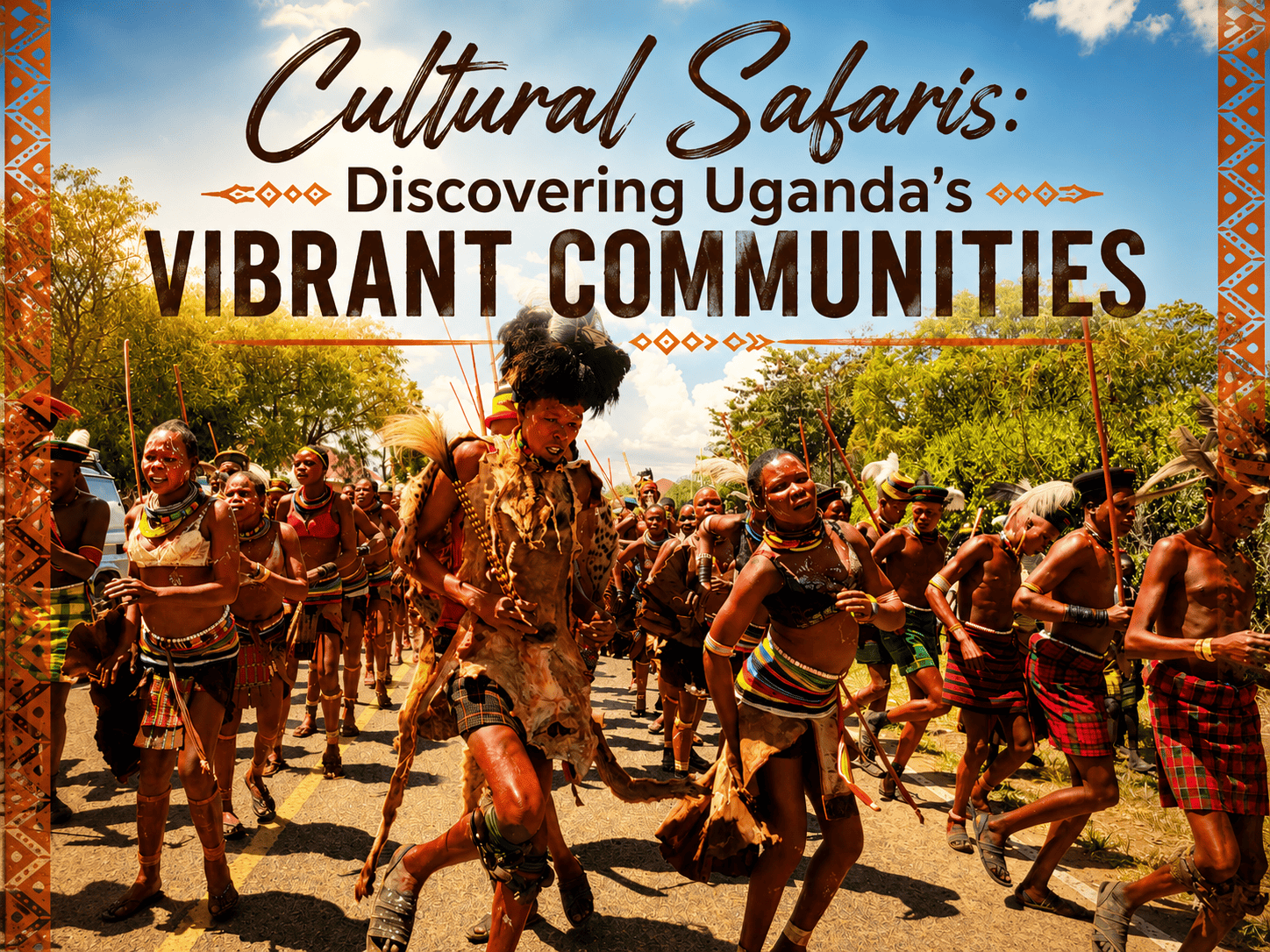
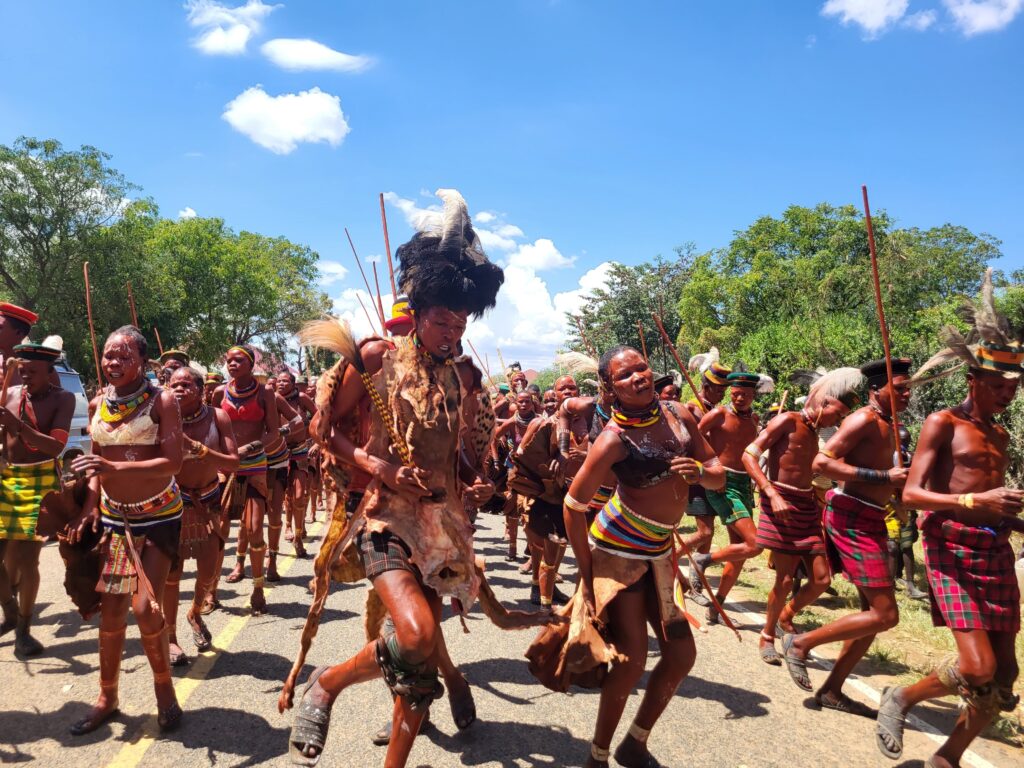
On Day 13 of our 18-day safari, guests spend an afternoon and evening with the Karamojong community near Kidepo Valley National Park. You witness traditional dances in beaded jewellery and ochre body paint, sit with elders, and hear through your guide the kind of life philosophy that gets forged when you live close to the land with no safety net. It is an encounter that resets your sense of what matters.
The Uganda Tourism Board has a good background on Karamoja as a cultural tourism destination for those wanting to read ahead.
The Tepeth: Uganda’s Most Overlooked Community
If the Karamojong are Uganda’s most iconic cultural encounter, the Tepeth are its best-kept secret.
The Tepeth are the original inhabitants of Karamoja, hunter-gatherers who predated the Karamojong in this region and were gradually pushed into the highlands of Mt. Moroto as the pastoralists arrived. They remain there today, little known to the outside world and rarely visited by tourists.
Day 15 of our 18-day itinerary takes guests to Moroto for a direct encounter with the Tepeth community. It is one of those rare travel moments that no itinerary summary can fully prepare you for a quiet, unhurried exchange with people who carry thousands of years of history in their daily lives.
No other standard Uganda safari includes this stop. It is one of the reasons this Raja Safari Holidays itinerary is genuinely different.
Bigodi Village: Community Tourism Done Right
Near Kibale National Park, Uganda’s chimpanzee capital, the Bigodi Wetland Sanctuary is one of Africa’s finest examples of community-managed tourism. Every shilling from entrance fees stays in the village. The community controls the narrative. Visitors leave with a genuine connection, not a transaction.
The Bigodi Wetland walk, included on Day 9 of the 18-day safari, takes you through a primate-rich wetland with over 200 bird species. But the real highlight is the village itself, basket weavers at work, traditional healers explaining medicinal plants, and schoolchildren whose education is partly funded by tourism. This is what sustainable travel looks like in practice.
Sipi Falls: The Coffee Culture of Mount Elgon
Culture is not only about tribes and traditions, but it is also about how people feed themselves and their families. The coffee tour at Sipi Falls on Day 17 of our 18-day itinerary is a masterclass in Uganda’s agricultural identity.
Uganda is one of Africa’s top coffee-producing nations. The smallholder farmers on Mount Elgon’s slopes grow some of the finest Arabica in the world, and the Sipi Falls coffee tour takes you through every step, from seed to cup, meeting the farmers behind the harvest. You finish with a cup of freshly roasted coffee with a three-tiered waterfall behind you. It is one of the most quietly satisfying experiences on the entire safari.
Tasting Uganda: Food as Cultural Entry Point
No cultural safari is complete without eating as locals eat.
Luwombo meat or groundnut sauce, slow-steamed in banana leaves, is Uganda’s most celebrated dish, historically prepared for the Buganda royalty. Matoke, steamed green bananas, is the national staple eaten in every household from Kampala to Kidepo. And the Rolex, a chapati rolled around a fried egg omelette with vegetables, is Uganda’s great street food, best eaten roadside after a morning game drive.
Every Raja Safari itinerary moves through communities where these foods are made fresh, daily. Ask your driver-guide to stop; they always know the right spot.

One Safari. All of It.
The cultural encounters described above are not scattered across different trips. They are all woven into Raja Safari Holidays’ 18-Day Rwanda & Uganda Safari, starting from $6,400 per person, inclusive of all park fees, permits, 4×4 transport, and an expert English-speaking driver-guide who doubles as your cultural interpreter throughout.
Gorillas in Bwindi. Chimpanzees in Kibale and Nyungwe. Big Five in Queen Elizabeth. And running through all of it are the people, the food, the stories, and the hospitality that make Uganda one of Africa’s most rewarding destinations for travellers who want more than a game drive.